

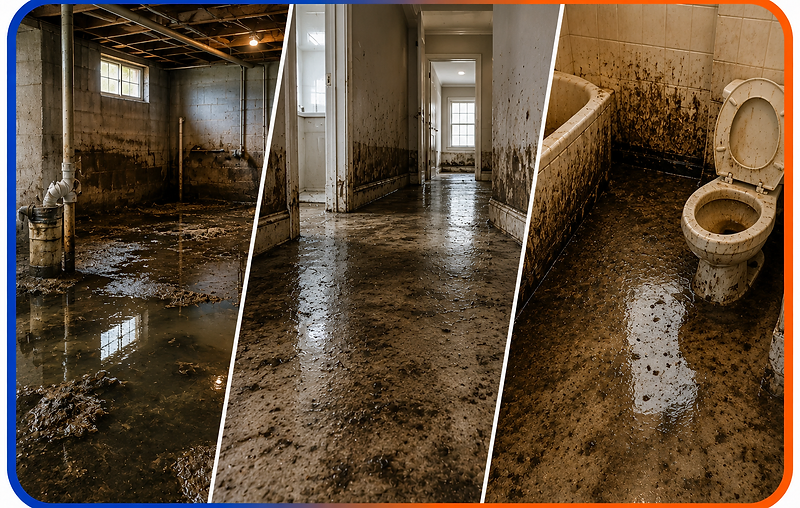
Sewage & Contaminated Water
Sewage & Contaminated Water Cleanup
Sewage overflow and contaminated water require specialist handling. We safely remove, decontaminate, dry and reinstate affected areas — with documented reporting.
What We Cover
Sewage & Contaminated Water Services
Sewage overflow and contaminated water, classified as grey or black water, carries bacteria, viruses and other pathogens that make it unsafe for untrained occupants to handle. Prompt, specialist cleanup is essential to protect health and prevent contamination spreading to adjoining areas.
Our trained technicians remove contaminated water, decontaminate affected surfaces, remove unsalvageable porous materials, dry the structure and treat odour, all with appropriate PPE and documented reporting for insurance and compliance purposes.
Quick Answers
Sewage & Contaminated Water FAQs
Is sewage cleanup dangerous?
Contaminated water can carry pathogens. It should be handled by trained technicians with appropriate PPE and decontamination processes — avoid disturbing contaminated water.
Why is sewage cleanup considered an emergency?
Sewage contains dangerous pathogens and bacteria that pose immediate health risks to occupants and pets.
Can I clean up sewage spillages myself?
No, professional equipment and protective gear are required to safely handle hazardous black water contamination.
What happens to porous materials like carpet?
Porous materials like carpet and underlay cannot be effectively disinfected and must be disposed of safely.
How do you ensure the property is sanitised?
We use hospital-grade biocides and advanced decontamination techniques to eliminate harmful contaminants and odours.
Do you provide documentation for insurance claims?
Yes, we provide detailed reports, photos and moisture logs to support your insurance claim process.
How long does the sewage restoration process take?
Duration depends on the affected area size and structural impact, but we prioritise rapid containment and drying.
Is it safe to stay in the house during cleanup?
It is generally not safe to remain on site until the affected areas are fully decontaminated and dried.
What measures prevent mould growth after a sewage leak?
We use industrial dehumidifiers and air movers to thoroughly dry the structure, preventing long-term mould issues.
How do you handle contaminated sub-flooring?
We remove, treat or replace contaminated sub-flooring to ensure the structure meets health and safety standards.
Are your technicians certified for hazardous waste?
Our team is trained in industry standards for handling biohazardous materials and sewage contamination safely.
When can I return to my property?
You can safely return once we verify through testing that the property meets sanitisation and dryness standards.
Water Damage
Related Resources & Guides
What To Do After Water Damage in Your Home
Discover essential steps to take after water damage in your home. Expert advice from Clean Dry Restore to minimise damage and ensure a safe recovery. Call 1300 REVIVE.
ReadCan Water Damage Cause Electrical Faults?
Discover if water damage causes electrical faults. Learn the risks, safety steps, and how Clean Dry Restore can help keep your property safe. Call 1300 REVIVE.
ReadBurst Pipe Water Damage: Immediate Steps
Discover immediate steps to manage burst pipe water damage in Newcastle and the Hunter Valley. Protect your home and contact Clean Dry Restore on 1300 REVIVE.
ReadWhat Is Moisture Mapping and Why It Matters
Discover why moisture mapping is essential for professional water damage restoration in Newcastle and the Hunter Valley. Ensure your property is truly dry.
Read24/7 Emergency Response
Need Help Now? Contact Clean Dry Restore
Rapid, documented property restoration across Newcastle & Greater Hunter. Available 24/7 for emergency response.